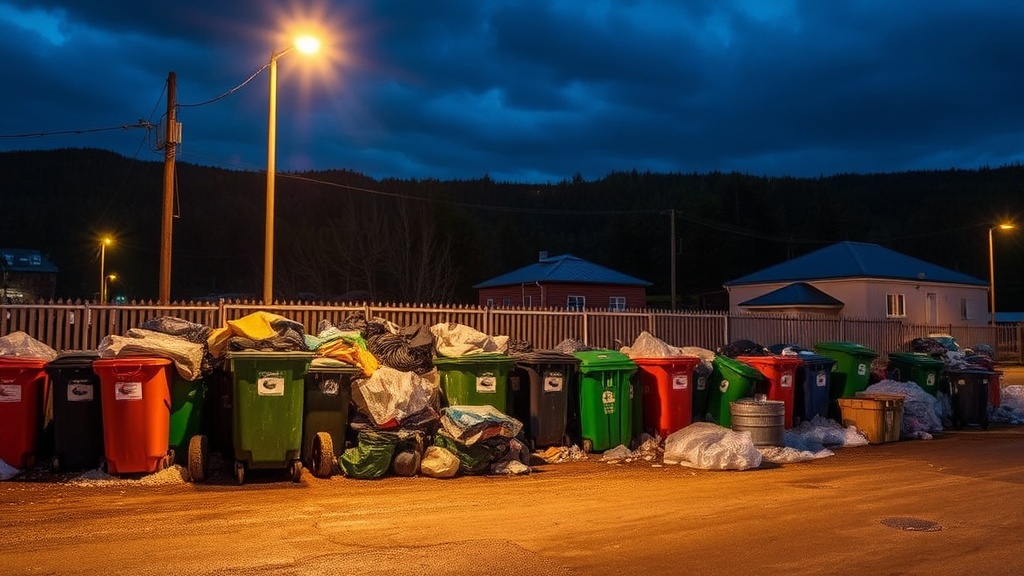
Managing Your Val-d'Or Municipal Waste and Recycling Properly

You'll learn how to handle your weekly waste collection, understand the specific recycling rules for our region, and how to deal with larger items without breaking local regulations in Val-d'Or. Managing household disposal correctly keeps our streets clean and ensures our local landfill remains efficient for the long term.
Living in Val-d'Or means being part of a community that values its natural surroundings. Whether you live near the downtown core or in the more residential areas closer to the outskirts, knowing the exact schedule and rules for garbage day is part of being a responsible neighbor. We've all seen the confusion when someone puts out the wrong bin or a bag that's too heavy, so let's get the facts straight.
How do I know when my garbage is being picked up in Val-d'Or?
The City of Val-d'Or operates on a set schedule for residential collection. Most neighborhoods have a fixed day of the week for trash and a separate day for recycling. It's not a random process; the city's collection services are highly structured to ensure every sector of Val-d'Or is covered. You can always check the official City of Val-d'Or website to confirm your specific sector's schedule. If you live near a major thoroughfare like Boulevard de la Renaissance, your collection might happen at a different time than those tucked away in quieter residential streets.
A common mistake we see is people putting out their bins too early. I've noticed a few neighbors setting out bins the night before, which can lead to issues if the wind picks up or if animals get into the bags. It's best to wait until the morning of your scheduled day. If you aren't sure which day your street falls under, don't guess—check the municipal calendar. Being proactive prevents your bin from sitting on the curb for an extra day, cluttering up the neighborhood view.
What can actually go in my Val-d'Or recycling bin?
Recycling in our part of the world isn't as simple as just throwing everything in a blue bin. The materials accepted in Val-d'Or depend on the processing capabilities of our regional facilities. Generally, clean paper, cardboard, certain plastics, and metal cans are the staples. However, there's a catch: everything must be clean. A greasy pizza box or a jar with leftover sauce isn't actually recyclable—it's just trash that's been contaminated.
- Paper and Cardboard: Ensure they are dry and flattened.
- Plastic Containers: Only specific types (like PET or HDPE) are usually accepted. Check the numbers on the bottom.
- Metal: Aluminum cans and steel tins are perfect, provided they are rinsed.
- Glass: Depending on the current collection cycle, glass may have specific requirements.
If you're unsure about a specific item, it's better to put it in the regular trash than to contaminate a whole batch of recycling. This is a common issue in our community, and a single unwashed container can sometimes ruin a whole load of sorted material. We want to keep our local processing as efficient as possible.
Where do I take large items or hazardous waste?
We've all been there: you buy a new piece of furniture or an old appliance breaks, and suddenly you have a massive object sitting by the curb. You can't just leave an old couch on the sidewalk in Val-d'Or and expect it to disappear. For large items, the city often has specific drop-off points or specialized collection days. The best way to handle this is to head to the local écocentre. This is a vital resource for all of us in the Abitibi-Témiscamingue region.
The Val-d'Or Écocentre is the place for things that don't belong in your weekly bin. This includes electronics, paint, batteries, and even certain types of construction debris. Taking the time to drive over there saves our local waste management teams from a headache and keeps our local environment much cleaner. It's a small effort that makes a big difference for the Val-d'Or landscape.
| Item Type | Disposal Method |
|---|---|
| Weekly Trash | Standard Bin |
| Recyclables | Blue Bin/Bag |
| Old Furniture | Écocentre or Special Pickup |
| Electronics | Écocentre Only |
For more detailed information on hazardous materials and where to find the nearest drop-off, you can consult the Government of Quebec's waste management guidelines. This is helpful if you're dealing with more complex chemical wastes that require professional handling.
One thing I've seen people struggle with is the disposal of organic waste. While some areas have different programs, staying on top of your food scraps can prevent odors in your kitchen, especially during our warmer summer months in Val-d'Or. If you're composting at home, make sure you're doing it in a way that won't attract local wildlife, as we know how much we value our local fauna.
Ultimately, managing waste in our city is a collective effort. When we all follow the same set of rules, the entire Val-d'Or community benefits from lower costs and a cleaner-looking town. It might seem like a minor thing, but it's these small habits that define how well we take care of our home.